NH₃ Refrigerant: The Industrial Benchmark

Ammonia (NH₃), also known as R717, remains the benchmark refrigerant for industrial refrigeration systems. Valued for its exceptional thermodynamic efficiency and reliability, it has been used in large-scale applications for more than a century.

Long established in North America and worldwide, ammonia continues to be the preferred choice for industrial refrigeration wherever performance, durability, and energy efficiency are critical.

The History of NH₃ in Refrigeration

The Early Days of NH₃ in Refrigeration

Ammonia was one of the first refrigerants used in mechanical refrigeration systems in the late 19th century. Its excellent thermodynamic properties quickly made it the dominant solution for industrial applications such as cold storage, food processing, and ice production.

Evolution in Industrial Applications

While synthetic refrigerants emerged during the 20th century, ammonia remained the standard in industrial environments. Advances in engineering, system design, and safety practices have continuously improved its performance and reliability.

A Proven Industrial Standard

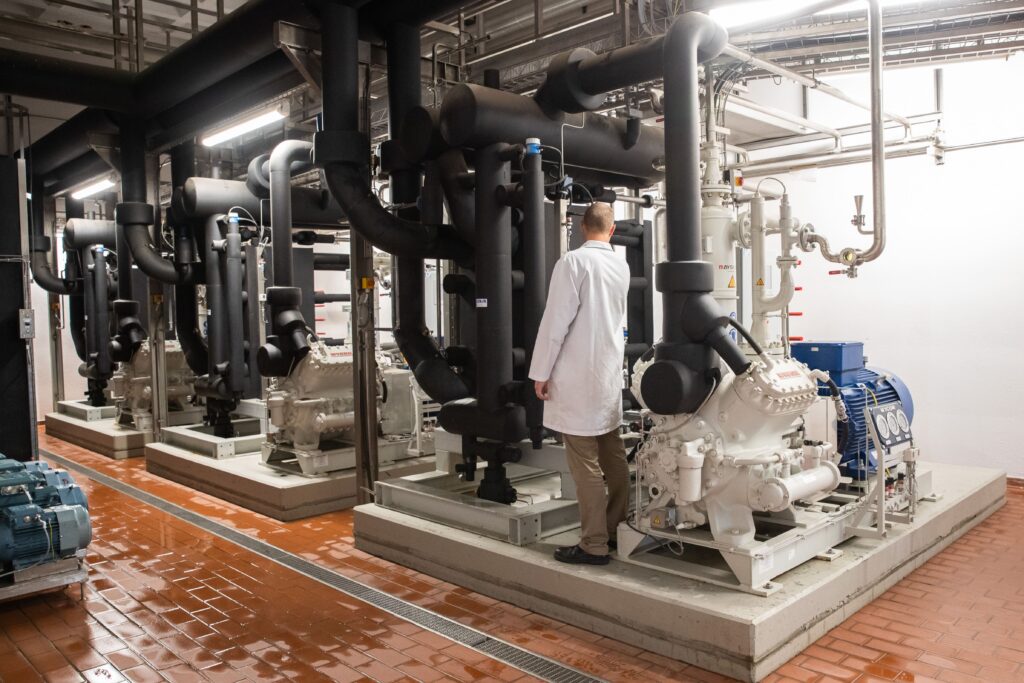
Today, ammonia refrigeration systems are used worldwide in large-scale projects. With decades of operational experience behind it, NH₃ remains a trusted and continuously optimized technology for demanding industrial applications.

In 2025, there were 1,480 industrial sites using low-charge ammonia in North America, a 20% jump from 1,230 in 2024, of which 1,020 were in the U.S. and 460 in Canada.

In North America, the number of industrial sites using low-charge ammonia grew 1.4-fold from 2023 to 2025. These 1,480 sites comprise 1,020 in the U.S. (840 with central and 180 with packaged systems) and 460 in Canada (420 central and 40 packaged)

Ammonia remains firmly established in industrial refrigeration in North America, owing to its large existing installed base, while manufacturers continue to improve its efficiency.

The Benefits of NH₃ Refrigeration

High Efficiency and Performance

Ammonia offers outstanding thermodynamic efficiency due to its high latent heat and excellent heat transfer characteristics. These properties allow systems to operate with reduced energy consumption and improved overall performance.

Robustness and Reliability

Ammonia systems are known for their durability and reliability. Designed for industrial environments, they deliver consistent performance in mission-critical operations where downtime is not an option.

Economic
Benefits

Ammonia refrigeration systems provide strong long-term economic advantages. Despite higher initial investment related to safety and compliance, they deliver:

Low refrigerant cost, Reduced energy consumption, Long system lifespan, Competitive total cost of ownership.

Environmental Responsibility

Ammonia is a natural refrigerant with Zero ozone depletion potential (ODP) and Zero global warming potential (GWP). Its use supports sustainability objectives and compliance with evolving environmental regulations.

Advanced NH₃ Refrigeration Technologies

Zero-C adapts ammonia technology to each facility’s safety, space, and performance needs through two approaches: low-charge ammonia systems and NH₃/CO₂ cascade systems, both designed to maximize efficiency while minimizing refrigerant inventory and risk.

Low-Charge Ammonia Systems

Modern design for improved safety and efficiency

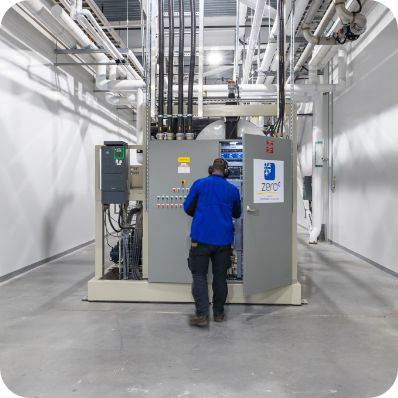
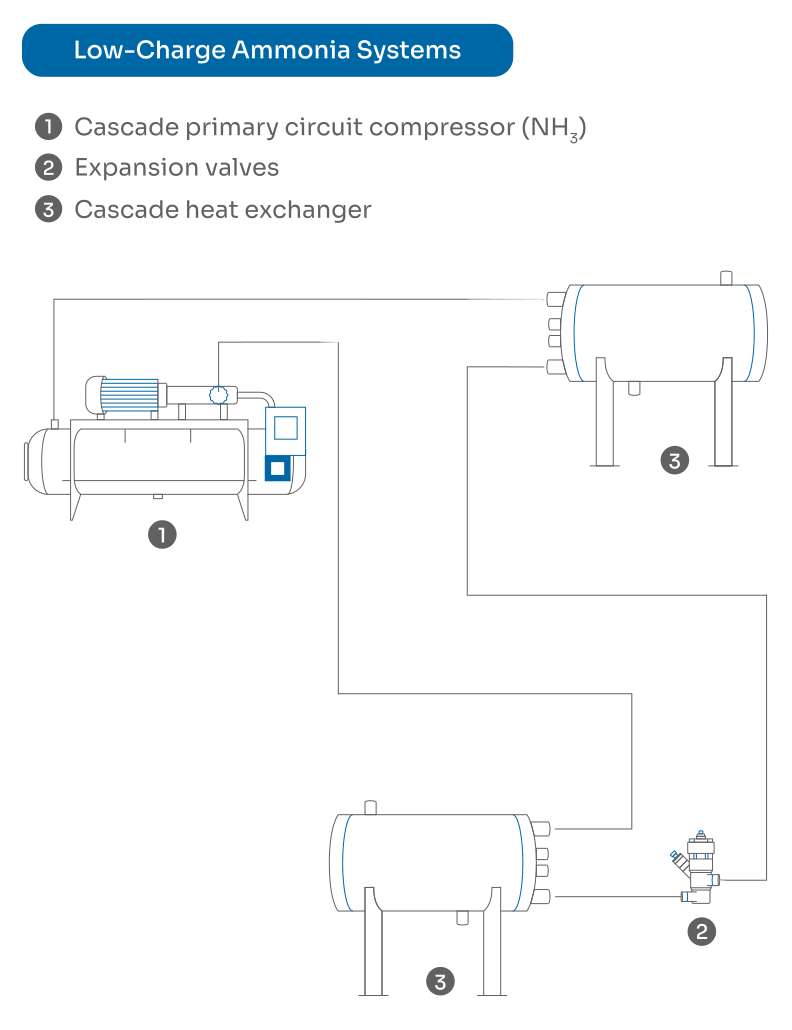
Low-charge ammonia systems represent the latest evolution of NH₃ refrigeration technology. By significantly reducing the refrigerant volume in the system, these designs improve safety while preserving the performance advantages of ammonia.

Typically built around packaged or distributed architectures, they keep the amount of ammonia on-site to a minimum and confine it to controlled areas.
Low-charge NH₃ systems are increasingly adopted where safety, footprint, and project timelines are critical but industrial-grade performance is still required.

Key Benefits:

  • Reduced ammonia inventory and associated risk
  • Simplified regulatory compliance
  • Enhanced safety for workers
  • Factory-built, tested, and modular systems
  • Fast installation and commissioning
  • High efficiency maintained with optimized system design

NH₃ / CO₂ Cascade Systems

Combining performance, safety, and efficiency

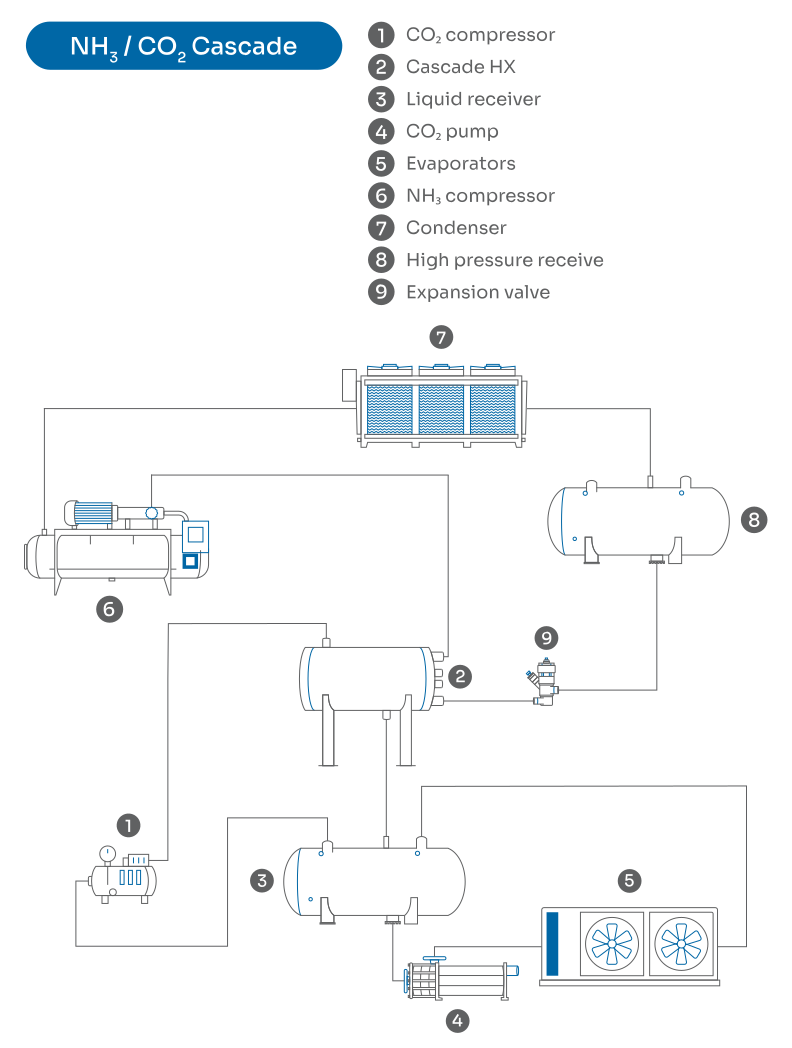
In many industrial applications, the most effective solution combines ammonia and CO₂ in a cascade configuration. NH₃ handles the high stage, centralized in a controlled machinery room, while CO₂ handles the low stage, distributed throughout the facility. This architecture lets each refrigerant operate where it performs best.

NH₃/CO₂ cascade systems are commonly used in food processing and cold storage facilities where operational constraints, safety considerations, or temperature requirements justify this type of architecture.

Key Benefits:

  • A significant reduction in ammonia charge
  • Increased safety in occupied and production areas,
  • High overall system efficiency,
  • Optimized design for large and complex facilities

Why Choose Zero-C for NH₃ Refrigeration?

Zero-C is a leading specialist in the design, manufacturing, installation, and maintenance of NH3 refrigeration systems.

With deep expertise and full control of the entire process—from design to commissioning—we deliver custom solutions precisely matched to each client’s needs.
Our team of engineers and specialized technicians provides ongoing support to optimize the performance of every installed system.

The Future of NH₃ Refrigeration

Ammonia refrigeration continues to evolve through modern system designs and ongoing innovation. Thanks to developments such as low-charge systems and improved automation, NH₃ installations are becoming more efficient, safer, and adaptable to a broader range of applications. Ammonia remains a key solution for large-scale refrigeration projects.

Widespread Adoption

Ammonia is widely used across industrial refrigeration sectors. Food processing plants, cold storage facilities, and heavy industrial applications rely on NH₃ systems for their performance and efficiency.

An R&D Lab for Innovation

Explore our R&D lab, where we push the limits of natural refrigeration to design more efficient and sustainable solutions.

Industries Served

Satisfied Customers

Start Your Project With Zero-C

Scroll to Top